
How to Select the Right Hydraulic Power Pack for Your Application
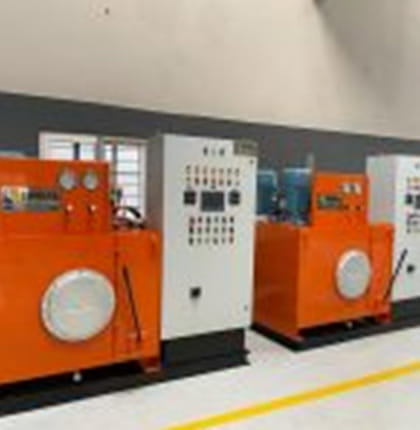
A hydraulic system will not operate efficiently, reliably and safely without the selection of the right hydraulic power pack. Whether it is the powering industrial machine, construction machinery, lifting platforms or automation systems, the power pack is the core of the hydraulic circuit. An efficient unit is chosen to promote performance, minimise energy usage and minimise maintenance expenditure. This is a detailed guide on how to select the best hydraulic power pack for the application.
UNDERSTANDING YOUR APPLICATION REQUIREMENTS
Begin by determining the precise use of the power pack. The hydraulic needs of each application vary, e.g. presses, lifts, material handling systems or agricultural machinery. Identify:
- Type of motion required
- Frequency of operation
- Environmental conditions
- Power pack installation space limitations.
This will be understood well to inform all technical decisions that are made henceforth.
DETERMINE FLOW AND PRESSURE REQUIREMENTS
Flow and pressure are the two core parameters that dictate your power pack’s performance:
- Flow rate determines the speed of your actuator.
- Pressure determines the force or torque the system can generate.
To find the right combination, consider:
- Cylinder bore and stroke
- Desired extension/retraction speed
- System load or required force
Using a power pack that does not have a sufficient pressure or flow may slow down or overheat or break down. Conversely, oversizing will result in higher energy consumption and expenses
CHOOSE THE RIGHT PUMP TYPE
Different types of pumps can be included in hydraulic power packs:
- Gear Pumps: This is a cost-effective and low to medium pressure that is simple to use.
- Vane Pumps: Vane pumps are quieter and they can be used in medium-duty systems.
- Piston Pumps: High pressure and high efficiency pumps are useful when industrial applications are required.
Your selection must be in line with the duty cycle, noise levels and efficiency requirements of your system.
SELECT AN APPROPRIATE ELECTRIC MOTOR
The motor that drives the pump must be adequately sized by considering its power rating, voltage requirements, duty cycle, and starting method, as a properly matched motor ensures smooth operation and prevents overheating.
HYDRAULIC RESERVOIR CAPACITY
This should have a capacity of 3-5 times the pump flow rate per minute to dissipate heat, enable the settling of contaminants and stabilise the system pressure and therefore the design should incorporate acceptable breathers, filters, baffles, and drain ports.
CONSIDER FILTRATION AND OIL CLEANLINESS
Hydraulic system failure is caused most often by contaminated oil, thus return line, suction and breather philtre usage and philtres are available on the power pack, which is easily serviced by an accessible philtre assembly.
ACCOUNT FOR CONTROL AND SAFETY FEATURES
In hydraulic power packs, modern controls may be provided to operate on pressure switches, solenoid valves, flow control valves, emergency shut-off, and temperature sensors. These characteristics increase safety, precision, and convenience.
ANALYSE COOLING REQUIREMENT
Hydraulic systems produce heat, thus in high duty or continuous operating applications, air-cooled heat exchangers, oil-coolers or a higher reservoir capacity should be considered because maintaining the heat in the oil within limits enhances performance and increases component life.
CONCLUSION
There is a delicate balance between performance, efficiency, safety, and cost of choosing the appropriate hydraulic power pack. Due to the fact that you have a clear understanding of your requirements in the application, and you are able to assess the important parameters such as the pressure, flow, type of pump, motor power and cooling requirements, you can select a power pack to provide a long-lasting and trouble-free service. The chosen unit is not only time-saving but also reduces the costs of operation because it is an intelligent investment in any hydraulic system.
Other Link: Choosing the Right Hydraulic Lift: A Buyer's Guide