
Exploring different Types of Hoists and their Applications
Hoists are essential lifting machines that are utilised in various industries to lift materials up or down or horizontally in a lift that is accurate and secure. They offer mechanical support which makes the physical load less demanding and efficient in material handling. The type of hoist to be used is decided by factors such as the capacity of the load, the height at which the hoist will be used, frequency of use, source of power, and the nature of the working environment. This manual discusses the main kinds of hoists and their major uses.
ELECTRIC CHAIN HOISTS
Electric chain hoists use an electric motor to drive a chain wheel, which lifts the load via a durable alloy chain. They are among the most common industrial hoists.
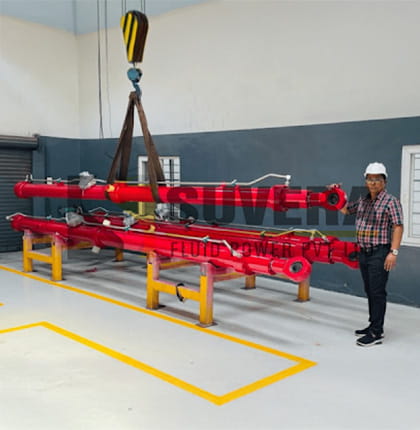
Primary Applications:
- Manufacturing & Assembly Lines: To do repetitive lifting of parts, engines and machines.
- Maintenance Bays: Raising heavy equipment to repair and service them.
- General Industrial Duty: General lifting that is under constant need.
WIRE ROPE HOISTS
Wire rope hoists utilize an electric motor to wind steel cables (wire ropes) onto a drum. They are designed for heavy-duty applications and higher lift heights.
Primary Applications
- Steel Mills & Foundries: Processing of hot metals, coils and raw materials.
- Scrapyards & Recycling: Relocating heavy, rough and rugged loads.Construction On-site transport of heavy materials (but frequently using mobile cranes).
- Mining Projects: Used in processing plants of heavy machinery maintenance.
MANUAL HOISTS (LEVER & CHAIN)
Manual hoists rely on human power for operation. They are portable, require no external power, and are ideal for precise positioning or use in remote locations
Primary Applications:
- Maintenance: Ideal for putting lifts, tension lines, and machinery in confined spaces.
- Emergency/Backup Lifting: Where there is no power or not so reliable.
- Construction Sites: To use smaller and more narrow lifts and pulling.
- Automotive: The placement of components in the manufacturing or fixing of vehicles.
AIR/PNEUMATIC HOISTS
Pneumatic hoists are powered by compressed air. They are intrinsically safe in hazardous environments as they do not produce sparks and can be used in wet conditions.
Primary Applications:
- Hazardous Areas: Areas around oil and gas platforms, chemical plants, paint spray rooms and grain elevators that contain explosive gases or dusts.
- Washdown Areas: Food and beverage processing and pharmaceutical cleanrooms.
- Hot Workplaces: Foundries and furnaces.
HYDRAULIC HOISTS
Hydraulic hoists operate on fluid pressure which is a pressure created by a pump to be used in activating a piston or motor to lift. They are characterised by their great power and smooth functioning.
Primary Applications:
- Heavy Machinery Lifting: In such industries as shipbuilding, power generation and heavy manufacturing.
- Lifts used in automobiles: Two-post and four-post car service lifts.
- Aerospace: Placing aircraft parts and engines.
- Mobile Applications: Typically being installed on truck-mounted cranes and recovery trucks.
CHOOSING THE RIGHT HOIST
The choice of the hoist should be efficient and safe. Key considerations include:
- Load Weight and Size: This must not be too heavy than the capacity of the hoist.
- Lift Height/Speed: Change to suit your working requirements.
- Duty Cycle: How often are you going to use the hoist (e.g. occasional or continuous)?
- Environment: consider such aspects as temperature, humidity, hazardous air, and purity.
- Power Availability: Determines: Electric, manual, pneumatic and hydraulic.
- Mounting and Mobility: Will it be mounted, or mounted on a trolley, or a part of a gantry system?
Being aware of the special advantages, and of the best use of each kind of hoist, businesses and operators will be able to make informed decisions that support the safety and productivity in the workplace, and their effectiveness in terms of cost.
Other Link: How Hydraulic Systems Work: A Complete Guide for Industrial Applications